
Merzouga history in its regional setting
Merzouga history makes more sense when you look beyond the dunes to the wider region. The village stands beside Erg Chebbi and is a gateway to the Sahara. The national tourism office places the surrounding destination in the context of earlier caravans towards Timbuktu. That regional connection gives you a way to read a journey through the area, alongside places associated with trade, settlement and fortified villages.
Start with the distinction between a landscape, a village and a historical site. Merzouga is the base for dune activities; Rissani introduces another part of the regional story, including the former trading city of Sijilmassa. A multi-day road journey can connect different settings, but each stop deserves its own context. Use the region as the framework rather than expecting one local monument to explain the whole desert.
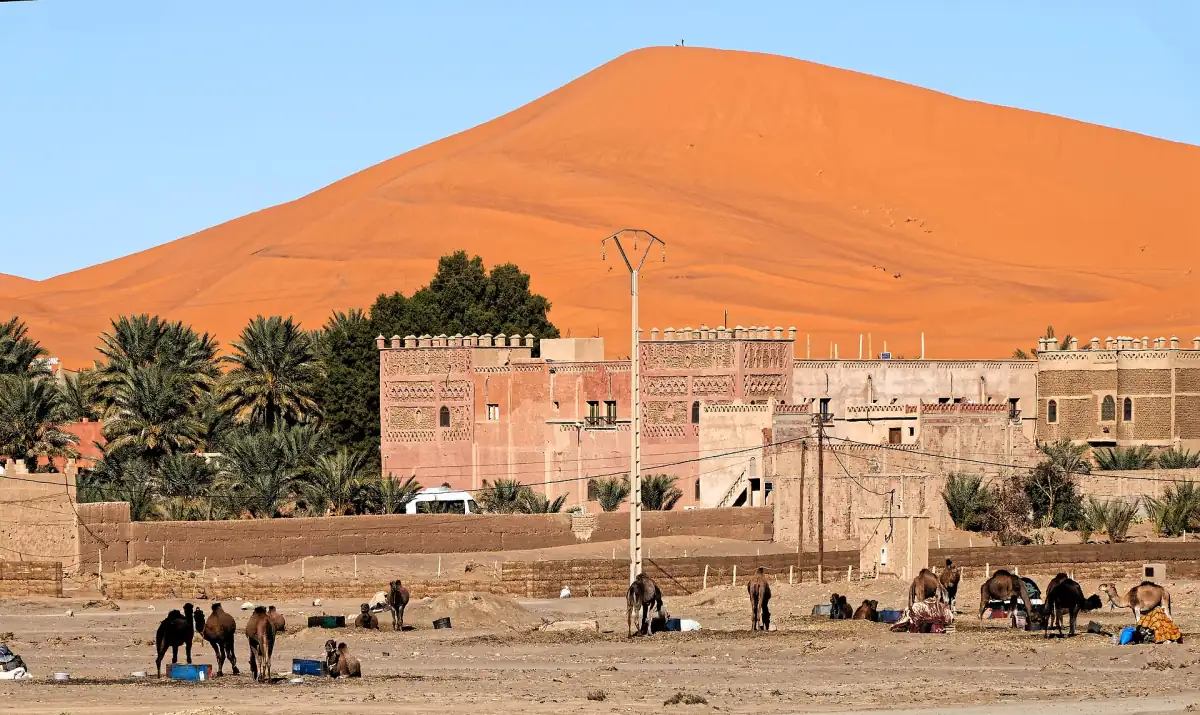
Caravan connections and Sijilmassa
The ONMT’s regional account connects this part of Morocco with former caravans to Timbuktu. Sijilmassa is identified as an old trading city, with its ruins among the historical places associated with Rissani. These references bring the human history of movement and settlement into a journey often introduced through dune scenery. They offer a useful subject for conversation when you plan a route with cultural stops.
Keep the geographical distinction clear. The former trading city is part of the regional history around Rissani; it is not another name for Merzouga or Erg Chebbi. Similarly, a modern road tour links places for visitors today, rather than reproducing an entire historical caravan journey. For the dune landscape itself, the Erg Chebbi guide covers a different part of the visit. History adds context to that landscape without replacing the practical decision about how to reach it.
Trip via Rissani
This Fes-to-Marrakech trip passes through Rissani and includes a camp night.
Hand-picked tours, booked through GetYourGuide. Prices are indicative starting prices in euros (as of October 2026). Tap a tour for live availability and the current price in your currency.
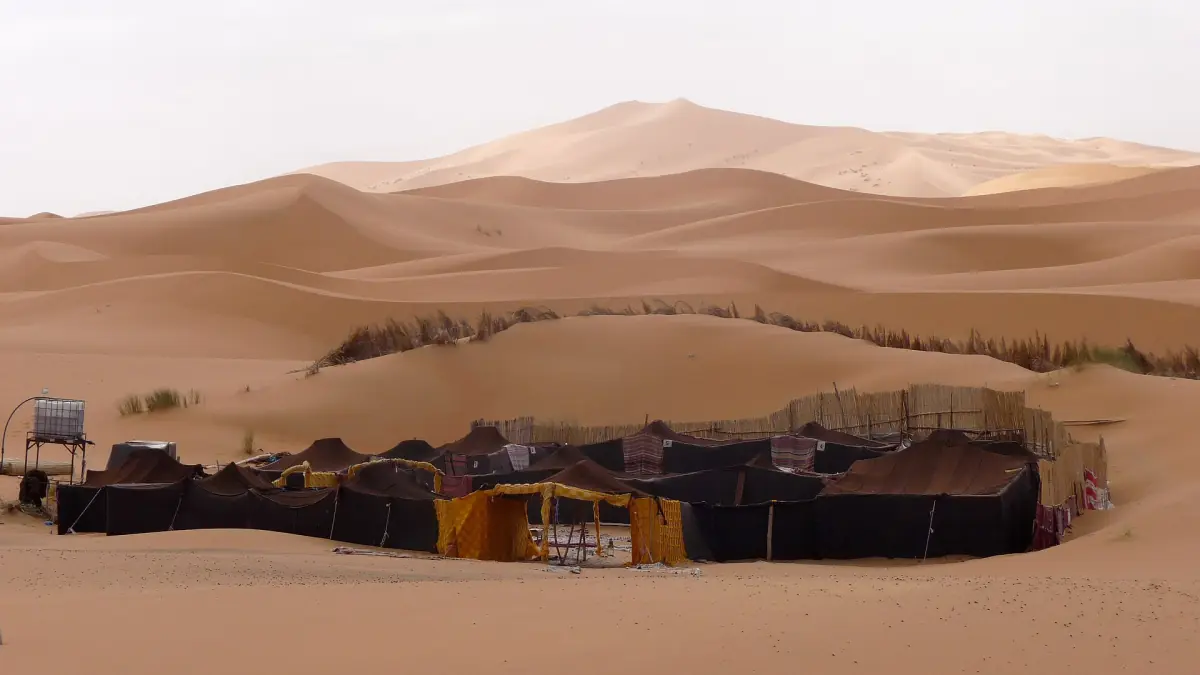
A route through the wider region
This three-day Fès to Marrakech journey includes a Merzouga camp night and mentions Rissani along the route, linking desert scenery with regional context.
Rissani and the souk: build a visit around the actual stop
Rissani brings together the Sijilmassa reference and the mausoleum of Moulay Ali Chérif in the ONMT’s cultural description. Treat the mausoleum as a historical place of reference when discussing the region. For an actual visit, establish the access arrangements and the programme for your date. The mention of a religious site in a regional guide is not a description of who can enter which spaces.
If the souk is important to your plans, ask which market stop and timing the itinerary provides. Keep that practical question separate from the historical account of trading activity. A regional association with commerce does not tell you what a present-day visit includes. The selected Fès to Marrakech route mentions Rissani on its second day; plan that stop as one stage of the wider journey, rather than as a separately booked local history walk.
Ksour and earthen architecture on the route
Ksour are fortified villages, described by the tourism office in terms of shared community interests. This gives the architecture a social context as well as a visual one. Think of the settlement as a whole when you discuss the term, rather than using it as a label for every earthen building you pass. The regional history includes inhabited places and communities as well as monuments.
Aït Ben Haddou provides a distinct route example. UNESCO describes a group of earthen buildings enclosed by defensive walls with corner towers. This is an explanation of that ksar, not a description of every house in Merzouga. It belongs to the road itinerary context. The Marrakech route guide helps place possible stops within the journey, while keeping the dunes and the architectural site as separate destinations.
A cultural stop within a three-day journey
The tour associated with this page starts with hotel pickup in Fès and finishes in Marrakech or at the nearest accessible point. Its three-day programme combines travel with a night in a Merzouga camp and a night in a hotel or riad in Tinghir or Ouarzazate. Included services cover air-conditioned road transport, a driver-guide, camel rides, sandboarding, dinner and breakfast. Rissani is a route stop, giving the journey a regional history connection.
Read the Fès to Merzouga route for the travel decision. Lunch and drinks are extra on this option, as are the 4×4 transfers and the local guide at Aït Ben Haddou. Keep the route’s overall character in mind: it combines places, travel and a desert night. For a broader choice of local outings and longer journeys, use the tours overview rather than treating the regional history page as a monument admission guide.
Questions before you go
How does Sijilmassa relate to this visit?
Sijilmassa is the former trading city associated with Rissani in the tourism office’s cultural account. It adds a regional historical reference to a journey based around Merzouga and the dunes.
What does the term ksour describe?
Ksour are fortified villages. Aït Ben Haddou is a specific example discussed along the route, with earthen buildings, defensive walls and corner towers; keep its description attached to that site.
Is the offered journey a local history walk?
It is a three-day road tour from Fès to Marrakech, combining a camp night, another overnight stay and route stops. Rissani is mentioned on day two, within that broader itinerary.